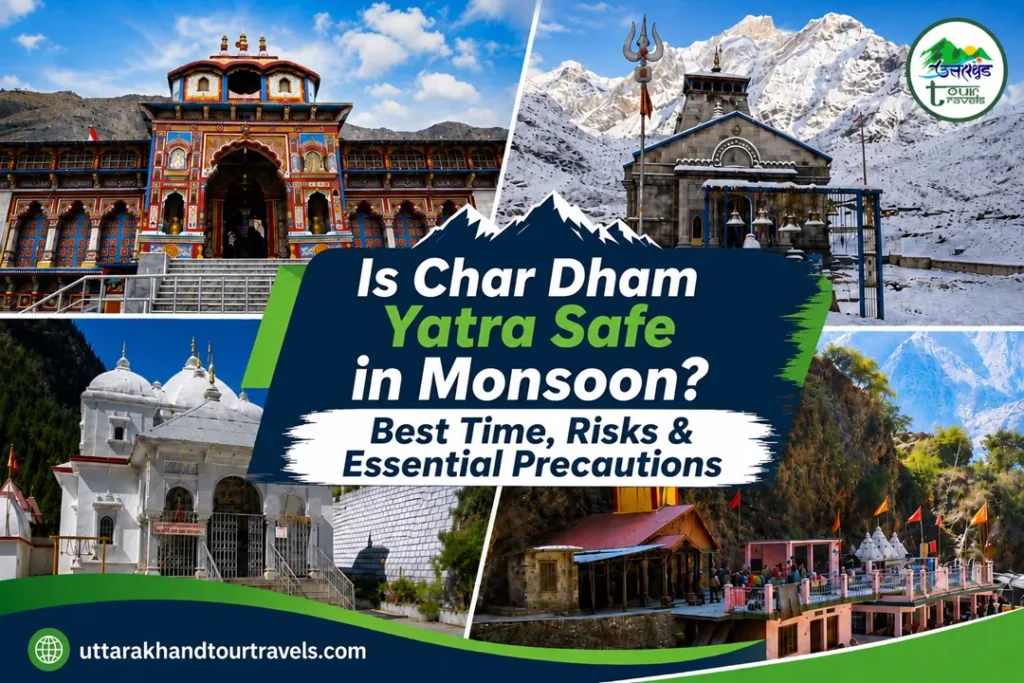
The Char Dham Yatra is one of India’s most sacred pilgrimages, taking devotees to Yamunotri, Gangotri, Kedarnath and Badrinath in the majestic Garhwal Himalayas. Every year, thousands of pilgrims travel through Uttarakhand to seek blessings and experience the spiritual atmosphere of these ancient temples.
However, travelling to the Char Dham shrines during the rainy season requires careful planning. The mountains become beautifully green, waterfalls grow stronger, and the valleys appear more vibrant, but heavy rainfall can also cause landslides, slippery trekking routes, road blockages, and sudden weather changes.
So, is the Chardham Yatra in monsoon safe?
The simple answer is that the journey is possible, but it carries significantly higher risks during July and August. Pilgrims should travel only after checking official weather forecasts, road conditions, and local administration advisories. Senior citizens, children, people with medical conditions, and first-time mountain travellers should preferably choose a safer travel window.
This guide by Uttarakhand Tour Travels explains the best time for the Char Dham Yatra, major monsoon risks, route-specific challenges, and essential precautions for a safer pilgrimage.
Is Char Dham Yatra Safe During the Monsoon?
The Char Dham Yatra in monsoon cannot be described as completely safe because Himalayan weather is highly unpredictable. Continuous rain can weaken mountain slopes, increase river levels and damage roads. Movement may also be temporarily stopped by the local administration when conditions become dangerous.
However, not every monsoon day is unsafe. There may be periods of light rainfall and stable road conditions when the journey can continue normally. Safety depends on several factors:
- The intensity of rainfall
- Current road and trekking conditions
- Weather warnings issued by authorities
- The traveller’s health and fitness
- The experience of the driver and tour operator
- Flexibility in the travel itinerary
Pilgrims planning the journey should avoid fixed, tightly packed schedules. An additional one or two buffer days can help manage unexpected road closures or temporary suspensions.
For a properly organized itinerary, travellers can explore the Char Dham tour package offered by Uttarakhand Tour Travels.
Quick Safety Overview
| Travel Factor | Monsoon Conditions | Risk Level |
|---|---|---|
| Mountain roads | Wet, slippery, and vulnerable to falling stones | High |
| Kedarnath trek | Slippery trail, rain, and reduced visibility | High |
| Yamunotri trek | Narrow, steep, and crowded in certain sections | High |
| Badrinath route | Mostly motorable but landslide-prone | Moderate to High |
| Gangotri route | Better road access, but rockfall is possible | Moderate |
| Hotel availability | Usually easier than peak season | Low |
| Crowd levels | Generally lower than May and June | Low |
| Weather reliability | Frequently unpredictable | High |
| Scenic beauty | Lush valleys, clouds, and waterfalls | Excellent |
Major Risks of Chardham Yatra in Monsoon
1. Landslides and Falling Rocks
Landslides are one of the biggest concerns during monsoon travel in Uttarakhand. Continuous rainfall saturates the soil and can destabilize mountain slopes. Loose rocks may fall onto roads, particularly along narrow stretches and recently cut slopes.
Even when a road is not completely blocked, debris removal can cause delays of several hours. Pilgrims should never insist that a driver cross an unstable section simply to stay on schedule.
2. Road Blockages and Travel Delays
The Char Dham routes pass through mountainous districts such as Uttarkashi, Rudraprayag, and Chamoli. Roads may be temporarily closed because of landslides, overflowing streams, damaged bridges, or construction work.
A journey expected to take seven hours can take considerably longer during rainfall. Travellers should avoid booking trains or flights immediately after the planned completion of the yatra.
Hiring an experienced local driver is especially important during this season. You can review the available taxi services in Uttarakhand for safer and better-planned mountain transportation.
3. Slippery Trekking Routes
Kedarnath and Yamunotri require pilgrims to cover significant trekking sections. Rain can make stone paths, muddy surfaces, and steep slopes extremely slippery.
The Kedarnath route is physically demanding even in favourable weather. During the monsoon, pilgrims may experience rain, fog, cold winds, and reduced visibility on the same day.
Travellers preparing for this route should read the detailed Kedarnath Trek guide before planning their journey.
4. Sudden Weather Changes
Weather in the high Himalayas can change within minutes. A clear morning may be followed by heavy rain, thunderstorms, or dense fog later in the day.
Travellers should begin road journeys and treks early in the morning. Afternoon and evening travel should be avoided whenever heavy rain is predicted.
5. Rising River and Stream Levels
The Char Dham routes follow important Himalayan rivers, including the Mandakini, Alaknanda, Bhagirathi, and Yamuna. Heavy rainfall can increase water levels quickly.
Pilgrims should avoid standing close to riverbanks, waterfalls, temporary streams and drainage channels. Never attempt to cross an overflowing stream on foot or in a vehicle without official clearance.
6. Health and Medical Challenges
Cold temperatures, humidity, physical exertion, and high altitude can create health problems. Travellers may experience breathing difficulty, dehydration, exhaustion, headaches, or altitude-related discomfort.
People with heart conditions, asthma, uncontrolled blood pressure, or mobility problems should consult a doctor before planning the journey.
7. Limited Network Connectivity
Mobile signals may be weak or unavailable on remote road sections and trekking routes. Power cuts are also possible during severe weather.
Pilgrims should carry a fully charged power bank, save important numbers offline, and share their itinerary with family members before beginning the journey.
Which Char Dham Route Is Most Difficult in Monsoon?
Kedarnath
Kedarnath is generally the most challenging shrine during the rainy season because pilgrims must undertake a long mountain trek from Gaurikund.
The route may become slippery, and rain can make the climb more exhausting. Fog may reduce visibility, while pony movement can create additional congestion on narrow sections.
Start the trek early, carry proper rain protection, and follow instructions given by the local administration. Avoid beginning the trek when heavy rainfall is predicted.
Yamunotri
Yamunotri from Janki Chatti is shorter than the Kedarnath trek but includes steep and narrow sections. Rainwater, mud, and pony traffic can make the route difficult.
Use trekking poles, wear high-grip footwear, and avoid rushing on wet slopes.
Gangotri
Gangotri is accessible by road, making it comparatively easier for many pilgrims. However, the route passes through mountainous terrain where falling stones, damaged roads, and temporary blockages are possible.
The journey should be planned during daylight with an experienced hill driver.
Badrinath
Badrinath is also accessible by road, but the route passes through landslide-sensitive areas in Chamoli district. Travellers may face delays near narrow road sections and construction zones.
Always confirm the latest road status before leaving Joshimath, Pipalkoti, or nearby stopover towns.
What Is the Best Time for Char Dham Yatra?
The safest and most comfortable periods are generally the pre-monsoon and post-monsoon travel windows.
| Period | Conditions | Recommendation |
| Late April to May | Cool weather with possible snow at higher elevations | Good |
| May to mid-June | Pleasant weather but heavy crowds | Excellent |
| Late June to August | Rain, landslides, and unpredictable roads | High caution |
| September to October | Clearer skies, fewer crowds, and stable conditions | Excellent |
| Late October onward | Increasing cold and possible snowfall | Weather-dependent |
May to Mid-June
This is one of the most popular periods for the Char Dham Yatra. Temperatures are relatively comfortable, roads are usually more stable, and the temples are fully operational.
The main disadvantage is heavy crowding. Hotels, vehicles, and helicopter services should be booked well in advance.
September to October
The post-monsoon period is often the best choice for travellers seeking clearer skies and fewer crowds. Mountain views are generally better, and the risk of prolonged rainfall is lower than in July and August.
However, temperatures begin to fall, particularly in Kedarnath, Gangotri, and Badrinath. Travellers must carry sufficient warm clothing.
July and August
July and August are usually the most challenging months for the pilgrimage. Travel is possible on certain days, but the risk of landslides, blocked roads, and slippery trails remains high.
Travellers who have flexible dates should postpone the journey until September.
Essential Precautions for Char Dham Yatra in Monsoon
Check the Weather Every Day
Do not depend on a forecast checked several days before departure. Monitor the weather every morning and before entering high-altitude routes.
Check official forecasts for Uttarkashi, Rudraprayag and Chamoli districts, as conditions can differ significantly between the four shrines.
Complete Yatra Registration
Complete the mandatory pilgrimage registration before beginning the journey. Carry a digital and printed copy of your registration details, identification documents, and medical information.
Travel With an Experienced Local Operator
Local travel professionals understand mountain routes, safe stopovers, alternative roads, and weather patterns. They can also help adjust the itinerary when authorities restrict movement.
Uttarakhand Tour Travels offers customized Uttarakhand tour packages with local transportation and itinerary assistance.
Keep Buffer Days
Add at least one or two extra days to your travel plan. Road blockages and weather restrictions can delay the journey without warning.
Do not schedule an important flight, train, or event immediately after the expected return date.
Start Early
Begin road journeys and treks as early as possible. Morning weather is often more manageable, while rainfall can intensify later in the day.
Early starts also provide more time to reach the destination before darkness.
Avoid Night Travel
Driving at night during monsoon is risky because of poor visibility, falling rocks, damaged roads, and the possibility of animals entering the road.
Plan to reach your hotel or designated stopover before sunset.
Follow Local Instructions
Police, SDRF teams, district authorities, and local drivers may temporarily stop vehicles or pilgrims. These restrictions are issued for safety.
Never cross a barricade or attempt to continue through a closed route.
Do Not Travel During Severe Alerts
Postpone the journey when a red or orange weather alert indicates very heavy rainfall or a serious possibility of landslides.
Religious travel should never take priority over personal safety.
Keep Emergency Supplies
Carry drinking water, dry food, medicines, a torch, a power bank, cash and warm clothing. Delays may occur in areas where shops or digital payment facilities are unavailable.
Buy Travel Insurance
Choose a travel insurance policy that covers medical emergencies, trip delays and evacuation where applicable. Read the terms carefully because high-altitude activities may have special conditions.
What to Pack for Chardham Yatra in Monsoon
Pack light, but do not compromise on weather protection.
Clothing
- Waterproof raincoat or poncho
- Quick-drying trousers and T-shirts
- Thermal innerwear
- Fleece or warm jacket
- Waterproof gloves
- Woollen cap
- Extra socks
- Lightweight towel
Footwear
- Waterproof trekking shoes with a strong grip
- Comfortable sandals for hotel use
- Gaiters for muddy trekking sections
- Additional shoe covers, if required
Health and Safety Items
- Personal prescription medicines
- Basic first-aid kit
- ORS and glucose
- Pain-relief spray or balm
- Hand sanitiser
- Insect repellent
- Sunscreen and sunglasses
- Trekking pole
- Reusable water bottle
Documents and Electronics
- Government-issued ID
- Yatra registration
- Hotel and vehicle booking confirmations
- Emergency contact list
- Mobile phone and charging cable
- Power bank
- Waterproof document pouch
Should Senior Citizens Attempt Char Dham Yatra in Monsoon?
Senior citizens should avoid the peak monsoon period whenever possible, particularly if they have heart, breathing, joint, or mobility-related conditions.
The Kedarnath and Yamunotri routes can become physically demanding during rain. Wet surfaces increase the risk of falls, while cold weather and high altitude may worsen existing medical problems.
A post-monsoon journey in September is generally more suitable. Senior travellers should undergo a medical check-up, carry sufficient medication, and choose shorter daily travel distances.
Is Monsoon Suitable for Families With Children?
Families travelling with young children should carefully consider the risks. Long road delays, wet weather, cold temperatures, and limited access to medical care can make the journey uncomfortable.
Children who are not accustomed to mountain travel may experience motion sickness, fatigue, or altitude-related discomfort.
Families should choose May, early June, or September rather than the peak monsoon.
Char Dham Yatra and Monsoon Treks Are Not the Same
It is important to understand that not all rainy-season travel in Uttarakhand carries the same level of risk.
Some organized monsoon treks in Uttarakhand, such as the Valley of Flowers, are specifically popular during the rainy season because the landscape becomes greener and alpine flowers bloom. These treks are generally conducted with guides, planned camps, and route-specific safety arrangements.
The Char Dham circuit, however, involves long road journeys, crowded pilgrimage trails, and multiple landslide-sensitive areas. A trek that is suitable during the monsoon does not automatically mean that every Char Dham route is equally suitable.
Adventure travellers can explore this guide to the best monsoon treks in Uttarakhand for safer seasonal alternatives.
What to Do If You Are Stranded During the Yatra
If heavy rainfall, a landslide, or a road closure interrupts your journey:
- Remain calm and follow instructions from the authorities.
- Do not leave your vehicle near an unstable slope.
- Move only toward an officially identified safe location.
- Avoid standing beside rivers, drains, or waterfalls.
- Keep your phone battery reserved for essential communication.
- Inform your hotel, tour operator, and family about the delay.
- Do not attempt shortcuts or unfamiliar walking routes.
- Wait for official clearance before continuing.
Benefits of Travelling With Uttarakhand Tour Travels
A monsoon pilgrimage requires local knowledge, flexible planning, and dependable transportation. Uttarakhand Tour Travels helps travellers with:
- Customized Char Dham itineraries
- Experienced mountain drivers
- Hotel and transportation arrangements
- Route and weather coordination
- Flexible travel planning
- Pilgrimage and trekking guidance
- Assistance for families and groups
To plan a customized pilgrimage, contact Uttarakhand Tour Travels before confirming your travel dates.
Final Verdict: Should You Plan Char Dham Yatra in Monsoon?
The Chardham Yatra in monsoon is possible, but it is not the safest time for the pilgrimage. Heavy rain can cause landslides, road closures, slippery trekking paths, rising river levels, and unexpected delays.
Travellers with flexible schedules should choose May to mid-June or September to October. Those who must travel during July or August should monitor weather forecasts daily, allow for buffer days, avoid night travel, and follow all instructions issued by the local authorities.
Faith may inspire the journey, but preparation protects the traveller. With responsible planning, proper equipment, and support from an experienced local travel company, pilgrims can reduce unnecessary risks and focus on the spiritual purpose of the Char Dham Yatra.
Plan your journey with Uttarakhand Tour Travels for customized itineraries, local transportation, and dependable travel assistance across Uttarakhand.
Frequently Asked Questions
Is Chardham Yatra in monsoon completely closed?
No. The yatra does not remain automatically closed throughout the monsoon. However, movement may be temporarily suspended during heavy rain, landslides, road damage or severe weather alerts.
Which months should be avoided for Char Dham Yatra?
July and August generally carry the highest monsoon-related risk. Travellers seeking safer conditions should preferably choose May, early June, September or early October.
Which Dham is most difficult during monsoon?
Kedarnath is usually the most challenging because it requires a long trek on a route that can become slippery during rainfall. Yamunotri can also be difficult because of its steep and narrow trail.
Can I complete the Char Dham Yatra by car?
Vehicles can reach the main road-accessible points, but Kedarnath and Yamunotri require trekking from their respective road heads. Badrinath and Gangotri are accessible by road, subject to weather and route conditions.
Is September a good month for Char Dham Yatra?
Yes. September is often one of the best months because rainfall usually decreases, greenery remains vibrant and crowds may be lower than during May and June.
Is a raincoat enough for the yatra?
A raincoat is essential, but it is not enough by itself. Travellers also need waterproof shoes, warm layers, quick-drying clothes, extra socks and waterproof protection for documents and electronics.
Should I book the yatra through a local tour operator?
A reliable local operator can help with route planning, accommodation, experienced drivers and itinerary changes during bad weather. This becomes particularly valuable during the monsoon.
