Is Char Dham Yatra Safe in Monsoon? Best Time, Risks & Essential Precautions

The Char Dham Yatra is one of India’s most sacred pilgrimages, taking devotees to Yamunotri, Gangotri, Kedarnath and Badrinath in the majestic Garhwal Himalayas. Every year, thousands of pilgrims travel through Uttarakhand to seek blessings and experience the spiritual atmosphere of these ancient temples. However, travelling to the Char Dham shrines during the rainy season requires careful planning. The mountains become beautifully green, waterfalls grow stronger, and the valleys appear more vibrant, but heavy rainfall can also cause landslides, slippery trekking routes, road blockages, and sudden weather changes. So, is the Chardham Yatra in monsoon safe? The simple answer is that the journey is possible, but it carries significantly higher risks during July and August. Pilgrims should travel only after checking official weather forecasts, road conditions, and local administration advisories. Senior citizens, children, people with medical conditions, and first-time mountain travellers should preferably choose a safer travel window. This guide by Uttarakhand Tour Travels explains the best time for the Char Dham Yatra, major monsoon risks, route-specific challenges, and essential precautions for a safer pilgrimage. Is Char Dham Yatra Safe During the Monsoon? The Char Dham Yatra in monsoon cannot be described as completely safe because Himalayan weather is highly unpredictable. Continuous rain can weaken mountain slopes, increase river levels and damage roads. Movement may also be temporarily stopped by the local administration when conditions become dangerous. However, not every monsoon day is unsafe. There may be periods of light rainfall and stable road conditions when the journey can continue normally. Safety depends on several factors: The intensity of rainfall Current road and trekking conditions Weather warnings issued by authorities The traveller’s health and fitness The experience of the driver and tour operator Flexibility in the travel itinerary Pilgrims planning the journey should avoid fixed, tightly packed schedules. An additional one or two buffer days can help manage unexpected road closures or temporary suspensions. For a properly organized itinerary, travellers can explore the Char Dham tour package offered by Uttarakhand Tour Travels. Quick Safety Overview Travel Factor Monsoon Conditions Risk Level Mountain roads Wet, slippery, and vulnerable to falling stones High Kedarnath trek Slippery trail, rain, and reduced visibility High Yamunotri trek Narrow, steep, and crowded in certain sections High Badrinath route Mostly motorable but landslide-prone Moderate to High Gangotri route Better road access, but rockfall is possible Moderate Hotel availability Usually easier than peak season Low Crowd levels Generally lower than May and June Low Weather reliability Frequently unpredictable High Scenic beauty Lush valleys, clouds, and waterfalls Excellent Major Risks of Chardham Yatra in Monsoon 1. Landslides and Falling Rocks Landslides are one of the biggest concerns during monsoon travel in Uttarakhand. Continuous rainfall saturates the soil and can destabilize mountain slopes. Loose rocks may fall onto roads, particularly along narrow stretches and recently cut slopes. Even when a road is not completely blocked, debris removal can cause delays of several hours. Pilgrims should never insist that a driver cross an unstable section simply to stay on schedule. 2. Road Blockages and Travel Delays The Char Dham routes pass through mountainous districts such as Uttarkashi, Rudraprayag, and Chamoli. Roads may be temporarily closed because of landslides, overflowing streams, damaged bridges, or construction work. A journey expected to take seven hours can take considerably longer during rainfall. Travellers should avoid booking trains or flights immediately after the planned completion of the yatra. Hiring an experienced local driver is especially important during this season. You can review the available taxi services in Uttarakhand for safer and better-planned mountain transportation. 3. Slippery Trekking Routes Kedarnath and Yamunotri require pilgrims to cover significant trekking sections. Rain can make stone paths, muddy surfaces, and steep slopes extremely slippery. The Kedarnath route is physically demanding even in favourable weather. During the monsoon, pilgrims may experience rain, fog, cold winds, and reduced visibility on the same day. Travellers preparing for this route should read the detailed Kedarnath Trek guide before planning their journey. 4. Sudden Weather Changes Weather in the high Himalayas can change within minutes. A clear morning may be followed by heavy rain, thunderstorms, or dense fog later in the day. Travellers should begin road journeys and treks early in the morning. Afternoon and evening travel should be avoided whenever heavy rain is predicted. 5. Rising River and Stream Levels The Char Dham routes follow important Himalayan rivers, including the Mandakini, Alaknanda, Bhagirathi, and Yamuna. Heavy rainfall can increase water levels quickly. Pilgrims should avoid standing close to riverbanks, waterfalls, temporary streams and drainage channels. Never attempt to cross an overflowing stream on foot or in a vehicle without official clearance. 6. Health and Medical Challenges Cold temperatures, humidity, physical exertion, and high altitude can create health problems. Travellers may experience breathing difficulty, dehydration, exhaustion, headaches, or altitude-related discomfort. People with heart conditions, asthma, uncontrolled blood pressure, or mobility problems should consult a doctor before planning the journey. 7. Limited Network Connectivity Mobile signals may be weak or unavailable on remote road sections and trekking routes. Power cuts are also possible during severe weather. Pilgrims should carry a fully charged power bank, save important numbers offline, and share their itinerary with family members before beginning the journey. Which Char Dham Route Is Most Difficult in Monsoon? Kedarnath Kedarnath is generally the most challenging shrine during the rainy season because pilgrims must undertake a long mountain trek from Gaurikund. The route may become slippery, and rain can make the climb more exhausting. Fog may reduce visibility, while pony movement can create additional congestion on narrow sections. Start the trek early, carry proper rain protection, and follow instructions given by the local administration. Avoid beginning the trek when heavy rainfall is predicted. Yamunotri Yamunotri from Janki Chatti is shorter than the Kedarnath trek but includes steep and narrow sections. Rainwater, mud, and pony traffic can make the route difficult. Use trekking poles, wear high-grip footwear, and avoid rushing on wet slopes. Gangotri Gangotri is accessible by road, making it comparatively easier for many pilgrims. However,
10 Best Monsoon Treks in Uttarakhand That Will Change How You See the Himalayas

Most people treat the monsoon as the off-season for Himalayan trekking. They wait for September skies and October clarity. And in doing so, they miss something irreplaceable. Between July and September, Uttarakhand transforms. The alpine meadows bugyals burst into colour. 500+ species of wildflowers bloom simultaneously in valleys that are bare in every other season. Waterfalls that don’t exist in May thunder down cliff faces. Forests that were dusty and sparse in April become dense, dripping, intensely alive. The air, washed clean by daily showers, carries the scent of Himalayan herbs. Yes, trails are wetter. Yes, some routes carry risk. But the trekkers who come in the monsoon see what the others only photograph in someone else’s pictures. This guide covers the 10 best monsoon treks in Uttarakhand for 2026 with everything you need: difficulty, distance, best timing, what to expect on the trail, and the essential safety knowledge to do it right. All 10 Monsoon Treks Quick Comparison # Trek Name Region Distance Max Altitude Difficulty Best Window Duration 1 Valley of Flowers Chamoli 38 km 3,658 m Moderate Jul – Sep 5–6 days 2 Nag Tibba Tehri Garhwal 6–7 km 3,050 m Easy All year 2 days 3 Dayara Bugyal Uttarkashi 22 km 3,639 m Easy–Mod Jul – Aug 3–4 days 4 Har Ki Dun Uttarkashi 25 km (one-way) 3,600 m Moderate Mar–Jun, Sep–Dec 5–7 days 5 Kush Kalyan Bugyal Tehri Garhwal 35 km 3,838 m Moderate Jul – Sep 5–6 days 6 Sahastra Tal Uttarkashi 45–65 km 4,750 m Difficult Aug – Oct 8–9 days 7 Dodi Tal Uttarkashi 20 km 3,024 m Moderate Monsoon & Winter 3–4 days 8 Gidara Bugyal Uttarkashi 33 km 4,240 m Mod–Difficult Jul – Sep 5–8 days 9 Roopkund Chamoli 53 km 5,029 m Difficult Early Jul only 8 days 10 Kedarkantha Base Uttarkashi 18 km 3,100 m Easy Jul – Aug 2–3 days 1. Valley of Flowers The undisputed king of monsoon trekking in India, a UNESCO World Heritage Site that only exists in this season. Region – Chamoli District Basecamp – Govindghat Difficulty – Moderate Distance – 38 km (incl. Hemkund) Max Altitude – 3,658 m (11,975 ft) Best Season – July – September Duration – 5–6 Days Min. Age – 5 Years There is no more perfect monsoon trek in India than the Valley of Flowers. This is not a seasonal preference; it is literally only accessible and only meaningful during the monsoon months. The valley is shut the rest of the year. And when it opens in June, it spends the next three months doing something no other place on Earth quite replicates: deploying over 500 species of Himalayan wildflowers in a concentrated 87 sq km hanging valley that sits at 3,500 metres above sea level. Declared a UNESCO World Heritage Site in 2005 and part of the Nanda Devi Biosphere Reserve, the Valley of Flowers was discovered by British mountaineer Frank Smythe in 1931 entirely by accident, when his team lost their way after a failed summit attempt. He was so overwhelmed that he named it on the spot. Nothing has changed about the magic since. The trek begins from Govindghat, 18 km from Joshimath on the Badrinath route. From Govindghat, you walk or take a shared vehicle to Pulna, then hike to Ghangaria (the base village), and spend the following days exploring the valley itself and, if you choose, the sacred Hemkund Sahib Gurudwara at 4,329 m. Peak bloom window: mid-July to mid-August. This is when the valley is at its absolute most spectacular. Brahma Kamal (the sacred Himalayan lotus), Blue Poppy, Cobra Lily, Himalayan Bellflower, Primulas, Anemones, Marsh Marigolds, and dozens of rare orchid species bloom the entire valley floor, a living mosaic of colour. 🌸 Why Monsoon is the ONLY Time to Visit: The Valley of Flowers does not exist in the same way in any other season. The monsoon rains are the direct trigger for this floral explosion. Come in May, and you see rocky slopes. Come in July, and you see one of the most extraordinary natural spectacles on the planet. 500+ alpine flower species, including the sacred Brahma Kamal, Blue Poppy, Himalayan Balsam, Wild Roses, Rhododendrons, Larkspur, Monkshood, and rare rock ferns Wildlife in the valley includes the Snow Leopard, the Asiatic Black Bear, the Red Fox, the Himalayan Monal, the Blue Sheep, and the Flying Squirrel Panoramic views of Gauri Parvat, Nilgiri, Nanda Devi, and Dunagiri on clear days Option to combine with Hemkund Sahib, the world’s highest Sikh Gurudwara at 4,329 m, beside a glacial lake surrounded by seven peaks Well-maintained stone-paved trail from Govindghat to Ghangaria is manageable even for beginners despite monsoon conditions UNESCO World Heritage Site since 2005, one of the planet’s most biodiverse alpine zones ⚠️ Monsoon Note: Trails between Govindghat and Ghangaria can become slippery after heavy rain. Start early, before 7 am, to complete the approach before afternoon showers intensify. A guide is highly recommended. River crossings must be assessed carefully. 2. Nag Tibba – Serpent’s Peak The perfect monsoon weekend escape from Delhi. Dense fog, rain-washed forests, and a 360° Himalayan panorama in just two days. Region – Tehri Garhwal Basecamp – Pantwari Village Difficulty – Easy Distance – 6–7 km Max Altitude – 3,050 m (10,007 ft) Best Season – All Year, incl. Monsoon Duration – 2 Days Nearest Town – Mussoorie / Dehradun For city-dwellers who want to experience Uttarakhand’s monsoon magic without a multi-day expedition commitment, Nag Tibba is the answer. Just 3 hours by taxi from Dehradun, Pantwari village is home to the highest peak in the lower Himalayan ranges of Garhwal and one of the most rewarding two-day treks in the country, regardless of season. In the monsoon, Nag Tibba becomes something special. The dense forests of oak, rhododendron, and pine that line the trail absorb the rain and release it back as mist. You hike through a canopy of fog so thick you feel as if you’re wrapped inside the mountain. Then, on the rare clear stretch, the tree canopies appear beneath you, a sea of green rolling toward
Kasar Devi Temple Mystery: The Most Powerful Spiritual Place in Uttarakhand
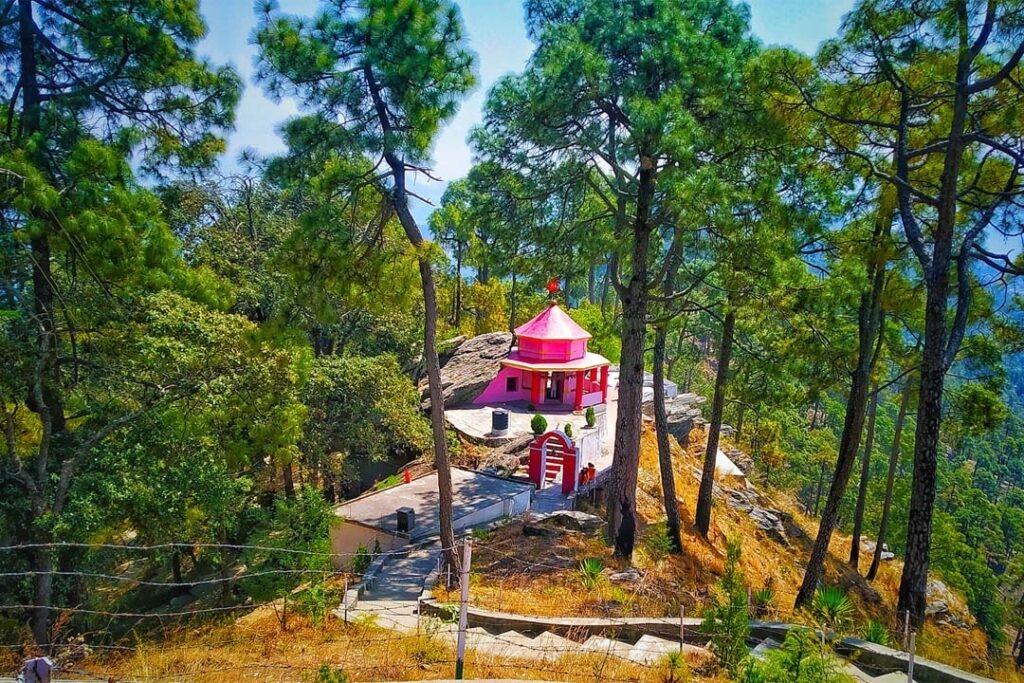
Most temples in India are known for their history, architecture, or religious significance. But the experience of visiting Kasar Devi Temple is something entirely different. Perched on the scenic Crank’s Ridge near Almora, this ancient cave shrine has been attracting spiritual seekers, scientists, and travelers from around the world for centuries. What makes it so unique? The answer lies somewhere between ancient spirituality and modern science. The Ancient Power of Kasar Devi Temple Unlike grand temples, Kasar Devi is a simple, quiet cave shrine carved into the hillside. Yet, it has been a center of meditation and spiritual energy for over 2,000 years. Altitude: 2,116 meters Distance: 8 km from Almora Dedicated to: Goddess Kasar Devi From the ridge, you can witness breathtaking Himalayan views, including peaks like Nanda Devi, Trishul, and Panchachuli. But the real magic is not just in the view, it’s in the energy of the place. The Mystery Behind Kasar Devi Temple Visitors often describe a similar experience: Deep calmness Mental clarity Strong meditative energy A feeling of being “present.” Many travelers come for a short visit but end up staying longer than planned. This isn’t just a belief, it’s a pattern observed for centuries. The Science: Van Allen Belt Connection Here’s where things get fascinating. Kasar Devi lies in a rare geomagnetic zone, where the Earth’s magnetic field behaves differently. Scientists have found that this ridge falls within a region where the Van Allen radiation belt comes unusually close to the Earth’s surface. Only a few places in the world share this phenomenon: Machu Picchu (Peru) Stonehenge (UK) Kasar Devi (India) This unique electromagnetic environment may influence: Brain activity Meditation depth Mental clarity While research is still ongoing, the connection between science and spiritual experience here is hard to ignore. Meditation Experience at Kasar Devi For meditation seekers, this place is considered one of the most powerful spots in India. Even beginners often report: Faster concentration Deeper meditation Inner peace The silence here feels different, almost “alive.” Many spiritual masters, including seekers influenced by Himalayan traditions, have meditated here. What to Do at Kasar Devi At the Temple Sit quietly inside the cave shrine Experience the calm energy Avoid rushing—this place is about stillness On the Ridge Walk along Crank’s Ridge Enjoy panoramic Himalayan views Watch sunrise or sunset Nearby Experiences Explore local cafés with mountain views Visit nearby villages and forests Spend time in nature without distractions Nearby Attractions You Should Explore While visiting Kasar Devi, you can also explore: Binsar Wildlife Sanctuary – Nature & wildlife Kainchi Dham – Spiritual ashram Almora Market – Local culture & food How to Reach Kasar Devi Temple By Air Nearest airport: Pantnagar (120 km) By Train Nearest station: Kathgodam (90 km) By Road Delhi to Almora: ~360 km (8–9 hours) Almora to Kasar Devi: 8 km Best Time to Visit March to June: Pleasant weather September to November: Clear mountain views Avoid the heavy monsoon season due to landslides. Why Kasar Devi Should Be on Your Travel List Rare combination of science + spirituality One of India’s most peaceful meditation spots Less crowded compared to other hill destinations Perfect for mental detox and self-discovery Final Thoughts The mystery of Kasar Devi Temple cannot be fully explained—it must be experienced. It’s not just a destination, but a place where: Ancient wisdom meets modern science Silence becomes powerful And time slows down Plan Your Spiritual Journey with Uttarakhand Tour Travels If you want to explore the deeper spiritual side of Uttarakhand, including Kasar Devi and nearby Himalayan destinations, Uttarakhand Tour Travels offers customized travel packages designed for comfort, exploration, and inner peace. Book your Kumaon Tour Package today and experience one of the most powerful places in India.
Kailash Mansarovar Yatra 2026: Mandatory Price Hike Announced
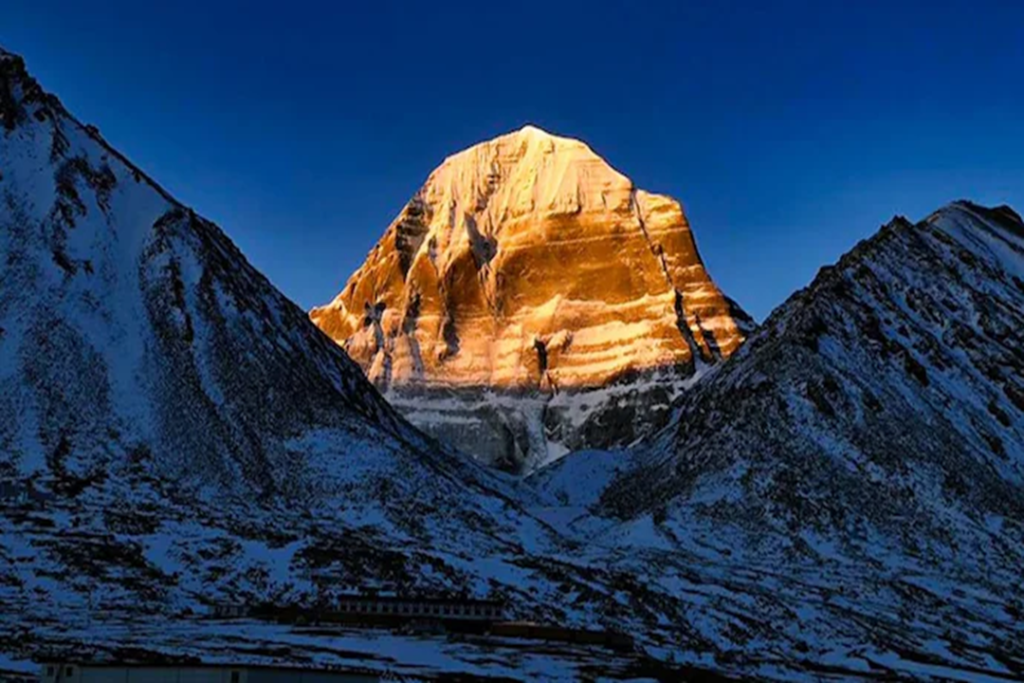
Namaskar from Uttarakhand Tour Travels We bring you critical information regarding the Kailash Mansarovar Yatra 2026 received from the Association of Kailash Tour Operators Nepal (AKTON). Chinese authorities (Foreign Exchange Center – FEC) have issued the official 2026 contract, mandating significant price revisions for Indian pilgrims along with strict operational policy changes. Mandatory Price Increase (Effective Immediately) Route Price Hike Per Person Overland Route USD 150 + ₹5,000 Helicopter (Lucknow-Lucknow) USD 150 + ₹15,000 Helicopter (Kathmandu-Kathmandu) USD 150 + ₹25,000 ⚠️ These rates are NON-NEGOTIABLE and apply to ALL bookings (new + existing). Additional Cost Alert Chinese authorities propose a fixed kitchen system – potential extra USD 150/person for standardized meals (final confirmation pending). CRITICAL Travel Restriction Saga Dawa Festival (17 May – 16 June 2026): Saga Dawa Festival permits HIGHLY RESTRICTED. ❌ NO yatra departures recommended during this sacred period. Why This Matters Rising costs in hotels, food, transport, and airfares make previous pricing unsustainable. Accepting lower rates risks: Poor accommodation quality Substandard food safety Unreliable transportation Compromised pilgrimage experience Our Commitment Uttarakhand Tour Travels follows AKTON-approved pricing to ensure: Premium accommodations Safe, quality meals Reliable transport Experienced guides Seamless darshan arrangements Next Steps Review your bookings with revised pricing Avoid planning Saga Dawa dates Contact us for rescheduling/revised quotes Stay connected – we’ll update you on all developments, including kitchen policy finalization. Jai Kailash Baba 🙏
Panch Kedar Temple Opening Date 2026 – Complete Travel Guide
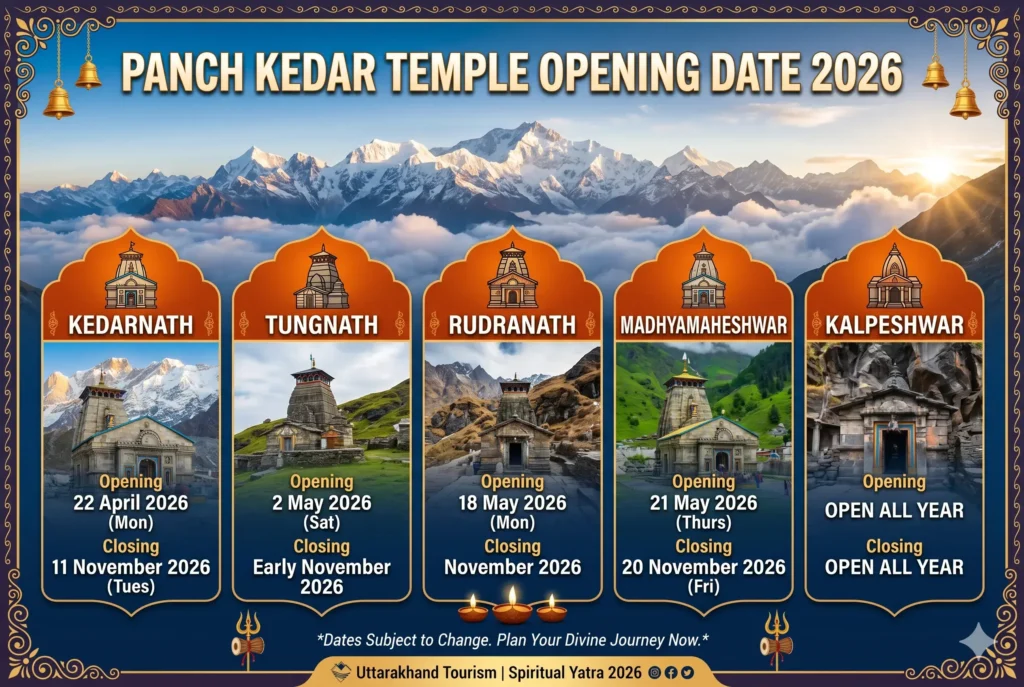
The Panch Kedar Yatra is one of the most sacred pilgrimages in India, nestled deep in the Garhwal Himalayas of Uttarakhand. Every year, thousands of devotees embark on this divine journey to seek the blessings of Lord Shiva at five holy temples: Kedarnath Temple, Tungnath Temple, Rudranath Temple, Madhyamaheshwar Temple, and Kalpeshwar Temple. If you’re planning your yatra, knowing the Panch Kedar Temple Opening Date for 2026 is crucial for smooth travel. In this guide, Uttarakhand Tour Travels covers everything from opening dates and routes to itinerary and expert tips. Panch Kedar Temple Opening Dates 2026 Here are the expected opening and closing dates for 2026: Temple Name Opening Date 2026 Closing Date (Tentative) Kedarnath 22 April 2026 11 November 2026 Tungnath 2 May 2026 Early November 2026 Rudranath 18 May 2026 November 2026 Madhyamaheshwar 21 May 2026 20 November 2026 Kalpeshwar Open All Year Open All Year The Panch Kedar Yatra officially begins with the opening of Kedarnath Temple on 22 April 2026. What is Panch Kedar? Panch Kedar refers to five sacred temples of Lord Shiva, each linked to the legend of the Pandavas from the Mahabharata. Mythological Significance After the Kurukshetra war, the Pandavas sought forgiveness from Lord Shiva. To avoid them, Shiva transformed into a bull. When Bhima tried to catch him, the bull disappeared into the earth, and its body parts appeared at five locations: Kedarnath – Hump Tungnath – Arms Rudranath – Face Madhyamaheshwar – Navel Kalpeshwar – Hair These five sacred sites together form the Panch Kedar. Panch Kedar Temples – Detailed Overview 1. Kedarnath Temple (First Kedar) Opening Date: 22 April 2026 Altitude: 3,583 meters Trek: 16–18 km from Gaurikund Kedarnath is the most prominent shrine and one of the 12 Jyotirlingas. The journey is spiritually enriching, with options for trekking or helicopter services. 2. Tungnath Temple (Second Kedar) Opening Date: 2 May 2026 Altitude: 3,680 meters Trek: 3.5 km from Chopta Known as the highest Shiva temple in the world, Tungnath offers stunning Himalayan views. Many travelers also visit Chandrashila Peak. 3. Rudranath Temple (Third Kedar) Opening Date: 18 May 2026 Altitude: 3,550 meters Trek: 18–20 km This is the most challenging trek, surrounded by lush meadows and forests, perfect for those seeking peace and adventure. 4. Madhyamaheshwar Temple (Fourth Kedar) Opening Date: 21 May 2026 Altitude: 3,497 meters Trek: 16–18 km Famous for its scenic beauty, the temple offers breathtaking reflections of the Chaukhamba peaks. 5. Kalpeshwar Temple (Fifth Kedar) Open throughout the year Altitude: 2,200 meters Trek: 2 km Located in the serene Urgam Valley, Kalpeshwar is the only temple accessible in all seasons. Best Time to Visit Panch Kedar in 2026 Summer (May–June) Pleasant weather Ideal for trekking Peak pilgrimage season Post-Monsoon (September–October) Clear skies Less crowd Best for photography Avoid the monsoon (July–August) due to landslides. Panch Kedar Yatra Route The journey usually starts from Haridwar or Rishikesh. Common Route: Haridwar → Rishikesh → Guptkashi → Kedarnath → Ukhimath → Chopta → Sagar Village → Ransi → Helang Duration: 14–16 days Total Trek Distance: Approx. 60 km Suggested 14-Day Itinerary Day 1–2: Haridwar to Guptkashi Day 3–5: Kedarnath trek & darshan Day 6: Travel to Chopta Day 7: Tungnath trek Day 8–9: Rudranath trek Day 10–11: Madhyamaheshwar trek Day 12: Kalpeshwar visit Day 13–14: Return journey Travel Tips by Uttarakhand Tour Travels Registration is Mandatory Register via the official Uttarakhand portal before your trip. Prepare Physically Start fitness training at least 1–2 months in advance. Pack Smart Carry: Warm clothes Trekking shoes Raincoat Basic medicines Start Early Always begin treks early to avoid weather risks. Accommodation Options GMVN guest houses Homestays Camps Why Choose Panch Kedar Yatra? Deep spiritual significance Connection with the Mahabharata Stunning Himalayan landscapes Perfect blend of adventure & devotion This journey is not just a pilgrimage; it’s a life-changing spiritual experience. Important Notes for 2026 Opening dates may vary based on the Hindu calendar Weather conditions can affect travel plans Always check official updates before departure Plan Your Panch Kedar Yatra 2026 with Experts The Panch Kedar Temple Opening Date 2026 marks the beginning of a divine Himalayan journey starting from 22 April 2026. Whether you’re traveling for spiritual peace or adventure, proper planning is key. 👉 Book your Panch Kedar Yatra Package 2026 with Uttarakhand Tour Travels today and enjoy a safe, well-organized, and memorable pilgrimage.
How to Register for Kedarnath Yatra 2026 – Step-by-Step Guide

Planning your spiritual journey to Kedarnath Temple in 2026? One of the most important steps before you begin your yatra is registration. Without it, you won’t be allowed to proceed beyond key checkpoints. This guide walks you through how to register for Kedarnath Yatra 2026, including online, WhatsApp, and offline methods, so you can travel stress-free. Why is Registration Mandatory for the Kedarnath Yatra? The Uttarakhand government has made registration compulsory to: Ensure pilgrim safety Manage crowd flow Provide emergency tracking and medical support Whether you’re traveling solo or in a group, every pilgrim must register. Online Registration for Kedarnath Yatra 2026 (Recommended) The easiest and fastest way is through the official portal: Visit: Uttarakhand Tourist Care Registration Portal Step-by-Step Process: Register/Login using your name and mobile number Enter traveler details: Number of यात्रियों (travelers) Travel dates Upload ID proof: Aadhaar Card / Passport / PAN Card Submit the form Download your Registration Form & QR Code Pro Tip: Save a digital copy and keep a printed version for smooth verification during the journey. WhatsApp Registration Option For a quicker process, you can also register via WhatsApp: Send “Yatra” to +91-8394833833 Follow the instructions shared on chat to complete your registration. Offline / Spot Registration If you miss online registration, you can still register at physical counters: ISBT Rishikesh Rahi Hotel Haridwar However, online registration is strongly recommended to avoid long queues and last-minute issues. Helicopter Booking for Kedarnath 2026 Planning to skip the trek? You can book helicopter services via: IRCTC Heli Yatra Portal Important: Requires a valid Yatra Registration Number Only trust the official portal to avoid scams Mandatory Documents You Must Carry During your yatra, always keep: Aadhaar Card or valid photo ID (physical copy) Registration QR Code (print or mobile) These will be checked at multiple points. Biometric Registration Biometric verification is an additional safety measure. 📍 Location: Sonprayag Make sure to complete this step before proceeding toward Kedarnath. Key Details for 2026 Registration: Official Website: registrationandtouristcare.uk.gov.in Opening Date: Registration portals went live on 6 March 2026. Temple Opening Date: 22 April 2026, 8:00 AM. Mandatory Registration: Every pilgrim needs a Yatra Registration Letter with a QR code for verification. Offline Availability: Offline registration counters open in areas like Haridwar and Sonprayag on 15 April 2026. Cost: Registration is free. Process: Sign up, create a tour profile, and download the registration letter. It is highly recommended to register early, especially if traveling in May or June, as preferred slots fill quickly. Important Tips for a Smooth Yatra Register as early as possible Avoid unauthorized agents or fake websites Start your journey early in the day Carry basic medicines and warm clothing Stay updated with the weather conditions Final Thoughts The Kedarnath Yatra is not just a trip; it’s a deeply spiritual experience. Proper registration ensures your journey is safe, organized, and hassle-free. By following the steps above, you can focus on what truly matters: your darshan at Kedarnath and the peace it brings.
Adi Kailash & Om Parvat: The Hidden Sacred Journey That Will Change You Forever

Adi Kailash and Om Parvat are two of those places, and I say this not as someone who read about them, but as someone who has stood at 17,000 feet, looked at the natural Om symbol formed in snow on a mountain face, and felt something shift permanently inside. I’ve explored Uttarakhand from Haridwar to the high Himalayas for over a decade. I’ve trekked routes that don’t appear on Google Maps. I’ve sat with local guides whose families have served pilgrims for generations. And of all the sacred journeys this incredible state offers, this one is different. Let me tell you everything. What Is Adi Kailash and Why Does It Matter? Most people know Mount Kailash in Tibet as the eternal abode of Lord Shiva, considered one of the most sacred sites in Hinduism, Buddhism, Jainism and Bon. Millions dream of visiting it. Very few can. But here’s what most travellers don’t know. Nestled in the Pithoragarh district of Uttarakhand, right on the India-Tibet border, stands Adi Kailash, also known as Chhota Kailash (Little Kailash). It bears a striking resemblance to the original Mount Kailash, carries the same spiritual significance, and sits entirely within Indian territory. No international permits. No extreme altitude acclimatisation crisis. No crossing foreign borders. Just you, the mountains, and one of the most profoundly moving pilgrimage routes in all of India. The route passes through dense forests, ancient villages, roaring rivers and high-altitude meadows before culminating at the Adi Kailash peak (6,191 m) and the sacred Parvati Sarovar a pristine glacial lake where pilgrims have taken holy dips for centuries. Om Parvat The Mountain That Writes God’s Name in Snow If Adi Kailash is the destination that humbles you, Om Parvat is the one that stops you completely. Located near the Lipulekh Pass at an altitude of approximately 6,191 metres, Om Parvat is famous for one extraordinary, undeniable phenomenon: the sacred symbol “ॐ” (Om) appears naturally in snow on its face. Not painted. Not carved. Not imagined. Just snow, shadow, and the hand of something far greater than human understanding. I have seen this with my own eyes on a clear October morning, standing at the viewing point near Nabhi Dhang, and I will tell you honestly, it is one of the most goosebump-inducing moments of my entire life. Fellow travellers around me, some seasoned trekkers, some first-time pilgrims, were in tears. There are no words adequate for it. You have to go. When Is the Best Time to Visit? Based on years of experience leading groups through this region, here is my honest recommendation: ✅May to June Best window. Clear skies, accessible roads, blooming rhododendrons on the trail. The Om symbol is still visible before summer snowmelt. Perfect for families and first-time pilgrims. ✅ September to October Post-monsoon magic. The entire landscape is washed clean and impossibly green. Crystal visibility for Om Parvat views. Cooler temperatures carry warm layers. ❌ July to August Monsoon season. Roads can be blocked by landslides. Not recommended unless you are very experienced. ❌ The November to April Route is closed due to heavy snowfall and extreme cold. The Route: What to Expect Day by Day Here is the classic Adi Kailash & Om Parvat Yatra itinerary we follow at Uttarakhand Tour Travels: Day 1: Delhi / Kathgodam to Dharchula. The journey begins. Long drive through the foothills of Kumaon. First glimpses of Himalayan peaks on the horizon. Day 2: Dharchula to Narayan Ashram / Sirkha Enter the inner Himalayan zone. Ancient forests, the Kali River running alongside you. The air changes here. Day 3: Sirkha to Gunji Cross into high altitude terrain. Gunji is the last major village stock up, rest well, and let the mountains remind you who is in charge. Day 4: Gunji to Nabhi Dhang (Om Parvat Darshan) This is the day. Rise before dawn. Drive to Nabhi Dhang viewpoint. And then the Om. Nothing prepares you for it. Day 5: Gunji to Jolingkong (Adi Kailash Base & Parvati Sarovar) Trek to Jolingkong. The Adi Kailash peak dominates the skyline. Take a dip in the sacred Parvati Sarovar if you dare it is ice cold and completely transformative. Day 6 & 7: Return Journey Descend through the same valleys that now feel like old friends. Return to Dharchula, then onwards to your home city, changed. Permits & Practical Information Since this route runs along the Indo-Tibet border, Inner Line Permits (ILP) are mandatory for all travellers, Indian and foreign nationals alike. This is where most independent travellers run into problems. Permit requirements, documentation, and border area regulations change regularly and must be handled correctly. This is exactly why travelling with an experienced, locally rooted agency matters enormously on this route. At Uttarakhand Tour Travels, we handle every permit, every documentation requirement, every logistics detail so you arrive at Adi Kailash with nothing on your mind except the journey itself. Why Travel with Uttarakhand Tour Travels? I started this agency because I was tired of watching travellers miss the soul of Uttarakhand, rushed through sacred places by agencies that had never actually been there. Every guide on our team has personally completed this yatra. We know which viewpoints are worth the detour. We know which tea stall in Gunji makes the best chai at 4 am. We know how to read the weather and when to push forward and when to wait. We offer: Complete Adi Kailash & Om Parvat Yatra packages are all-inclusive Full permit handling, ILP, and all border documentation Private & group departures from Delhi, Kathgodam & Dehradun Comfortable stays at guesthouses, camps and eco-lodges along the route Certified local guides who know this terrain in every season 24/7 support throughout your journey 👉 Visit uttarakhandtourtravels.com to explore our packages, check departure dates, and book your spot. Spaces on each batch are strictly limited. This is not a commercial tourist circuit it is a pilgrimage, and we treat it like one. One Last Thing Before You Go People ask me all the time,
Char Dham Pilgrimage 2026: Kedarnath Dham Announces Opening Date on Maha Shivaratri
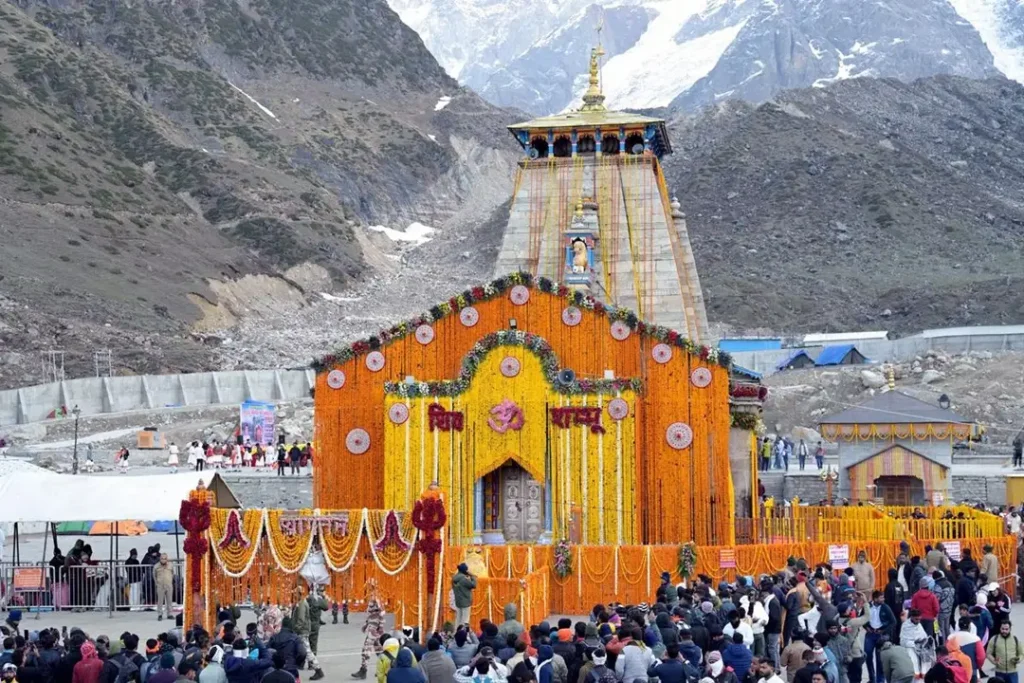
The sacred portals of Kedarnath Dham will officially open on the auspicious occasion of Maha Shivaratri, marking the spiritual beginning of the 2026 pilgrimage season in Uttarakhand. The announcement has brought immense joy to devotees eagerly waiting to embark on the holy Char Dham Yatra. For thousands of pilgrims across India and abroad, this declaration marks the beginning of planning their sacred journey to the Himalayas. Official Kedarnath Opening Date 2026 The doors of Kedarnath Temple will open on: 22 April 2026 As per age-old tradition, the official Kedarnath opening date was finalized after consulting the Hindu Panchang and performing sacred rituals in the presence of temple priests and authorities. With this announcement, preparations for the Char Dham Yatra 2026 have officially begun across Uttarakhand. Preparations Underway for Kedarnath Yatra 2026 The Uttarakhand administration has initiated multi-departmental reviews to ensure a smooth and safe pilgrimage season. Key arrangements include: Road restoration and maintenance Snow clearance on trekking routes Medical and emergency facilities Drinking water and sanitation services Power supply and communication systems Pilgrim accommodation arrangements Authorities are working closely with disaster management teams to ensure safety in the high-altitude terrain of Kedarnath. Enhanced Safety & Crowd Management Given the unpredictable Himalayan weather and increasing number of devotees every year, special attention is being given to: Disaster preparedness and rapid response systems Strengthened police deployment Improved traffic control Organized crowd management near temple premises These measures aim to provide a safe and spiritually fulfilling experience for every yatri. Spiritual Significance of Kedarnath Yatra Situated in the Garhwal Himalayas, Kedarnath is one of the twelve Jyotirlingas of Lord Shiva and holds immense religious importance. The annual reopening of the temple symbolizes devotion, faith, and spiritual renewal. The opening of Kedarnath Dham traditionally marks the ceremonial start of the Char Dham Yatra, which includes: Badrinath Temple Yamunotri Temple Gangotri Temple Kedarnath Dham Lakhs of devotees undertake this sacred journey every year seeking divine blessings and spiritual peace. Important Advisory for Pilgrims Before planning your Kedarnath Yatra 2026, make sure to: Complete mandatory government registration Follow official travel guidelines Stay updated with weather advisories Carry essential medical and travel documents Book accommodation and travel in advance Plan Your Kedarnath & Char Dham Yatra with Uttarakhand Tour Travels As a trusted Uttarakhand tour travel provider, we offer: Kedarnath Yatra Packages 2026 Complete Char Dham Tour Packages Helicopter Booking Assistance Hotel & Dharamshala Reservations Transportation from Haridwar, Rishikesh & Dehradun Customized Family & Senior Citizen Packages Avoid a last-minute rush and secure your pilgrimage in advance. Let our experienced team handle your travel, stay, and registration process while you focus on devotion and spiritual experience. Book Early for a Peaceful & Comfortable Yatra With the official opening date of 22 April 2026 announced, the rush is expected to be high. Early booking ensures better accommodation options and smoother travel arrangements. Embark on your divine journey to Kedarnath Dham in 2026 with comfort, safety, and complete travel support. Contact Uttarakhand Tour Travels today and reserve your sacred Himalayan pilgrimage.
Kedarnath Opening Dates 2026: Complete Guide for Pilgrims
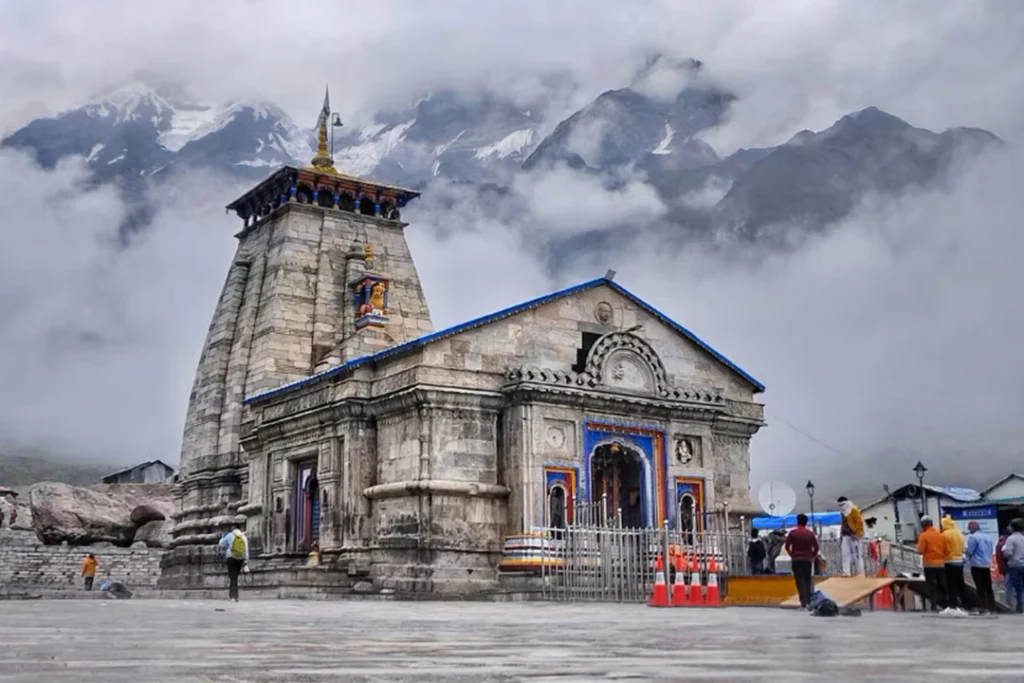
The Kedarnath Yatra is one of the most sacred pilgrimages in India and holds immense spiritual importance for devotees of Lord Shiva. Nestled high in the Garhwal Himalayas, Kedarnath Temple is one of the twelve Jyotirlingas and a key part of the Char Dham Yatra. Every year, lakhs of pilgrims eagerly wait for the official Kedarnath opening dates to plan their journey. Kedarnath Temple Opening Dates 2026 The Kedarnath Temple in Uttarakhand is scheduled to open for pilgrims on April 22, 2026, at 8:00 AM. The opening date is announced on the auspicious occasion of Maha Shivratri by the temple committee after traditional rituals at Omkareshwar Temple in Ukhimath. From this date onward, devotees can begin their pilgrimage to seek the blessings of Lord Kedarnath. The temple remains open for approximately six months, closing again around Bhai Dooj in November, depending on weather conditions. Why Kedarnath Closes Every Winter In winter, Heavy snowfall makes the region inaccessible and unsafe for pilgrims. The temple is completely covered in snow Temperatures drop well below freezing Roads and trekking routes become impassable As per tradition, the idol of Lord Kedarnath is moved to Ukhimath, where worship continues throughout the winter months. Kedarnath Opening Ceremony: A Spiritual Experience The opening ceremony of Kedarnath Temple is a deeply spiritual and emotional event. The temple doors are opened with Vedic chants, rituals, and the presence of priests, army personnel, and devotees. Key highlights include: Decoration of the temple with flowers Traditional processions First Maha Abhishek of the season Chanting of “Har Har Mahadev” echoes across the valley Witnessing the opening ceremony is considered extremely auspicious and is a once-in-a-lifetime experience for many devotees. Best Time to Visit Kedarnath in 2026 May to June: Pleasant weather, peak pilgrimage season July to August: Landslide risk. September to October: Clear skies, fewer crowds, ideal for peaceful darshan Uttarakhand Tour Travels recommends May–June and September for a safe and comfortable yatra. Weather Conditions Weather plays a crucial role in planning the Kedarnath Yatra. April–May: Cold mornings and evenings, daytime temperatures are manageable June: Mild weather, suitable for trekking Monsoon (July–August): Heavy rainfall, increased risk of landslides September–October: Cool and stable weather, scenic views How to Reach Kedarnath Temple Reaching Kedarnath involves a combination of road travel and trekking. By Road Well, connectivity to the Gaurikund. Well-connected from Rishikesh, Haridwar, and Dehradun Trekking 16 km trek from Gaurikund to Kedarnath Options include trekking, pony, palki, and helicopter services Helicopter Services Helicopter services operate from Phata, Guptkashi, and Sersi, subject to weather conditions. Registration for Kedarnath Yatra 2026 Registration is mandatory for all pilgrims planning the Kedarnath Yatra. Online registration through the Uttarakhand government portal Offline registration centers at major entry points Required documents include valid ID proof Kedarnath Tour Packages by Uttarakhand Tour Travels Uttarakhand Tour Travels offers carefully designed Kedarnath tour packages for 2026, catering to different travel needs and budgets. Package highlights include: Comfortable hotel accommodations Safe transportation Assistance with yatra registration Helicopter booking support Experienced local guides Important Travel Tips for Kedarnath Yatra 2026 Start your trek early in the morning Carry necessary medicines and a basic first-aid kit Stay hydrated and eat light meals Follow local administration and weather advisories Respect temple rules and local customs Proper preparation ensures a safe and memorable yatra experience. Conclusion With reliable services, expert guidance, and well-planned itineraries, Uttarakhand Tour Travels is your trusted partner for the Kedarnath Yatra 2026. Book early and embark on a divine journey filled with faith, devotion, and breathtaking Himalayan beauty.
Daily Taxi Service from Pantnagar Airport: Reliable, Comfortable & On-Time Travel

Traveling in Uttarakhand is all about timing, comfort, and local understanding. Whether you are arriving for a spiritual visit, a family holiday, or a business trip, having a dependable taxi service makes all the difference. Uttarakhand Tour Travels offers a Daily Taxi Service from Pantnagar Airport, designed to make your journey smooth, safe, and stress-free. Pantnagar Airport is the main air gateway to the Kumaon region, connecting travelers to popular destinations like Nainital, Haldwani, Kathgodam, Bhimtal, Mukteshwar, Almora, and the highly revered Kainchi Dham. Our Pantnagar taxi service operates daily with experienced drivers, well-maintained vehicles, and transparent pricing, perfect for both locals and tourists. Why Choose Daily Taxi Service from Pantnagar Airport? Pantnagar Airport is around 20–25 km from Haldwani and Kathgodam, and nearly 75 km from Kainchi Dham. Public transport options are limited and often inconvenient, especially for early morning or late evening flights. That’s where our daily taxi service from Pantnagar Airport becomes the most reliable option. With Uttarakhand Tour Travels, you get: Airport pickup without waiting Door-to-door drop service Comfortable vehicles for hilly roads Local drivers who know mountain routes well Fixed pricing with no last-minute surprises Whether you are traveling solo, with family, or in a group, we ensure a comfortable start to your Uttarakhand journey. Pantnagar Taxi Service for Kainchi Dham One of the most popular routes from Pantnagar Airport is to Kainchi Dham, the sacred ashram of Neem Karoli Baba. Devotees from across India and abroad visit Kainchi Dham throughout the year, especially during weekends and the annual fair. Our Kainchi Dham taxi service is available daily from Pantnagar Airport, Kathgodam, and Haldwani. We understand the spiritual importance of your visit and ensure: Timely pickup aligned with your flight arrival Smooth hill drive with experienced drivers Flexible stops for food or rest if needed If you’re looking specifically for a Kainchi Dham daily taxi service, Uttarakhand Tour Travels is a trusted choice among pilgrims and families. Kathgodam Taxi Service – Daily & Dependable Kathgodam is the main railhead of Kumaon and a major taxi hub. Many travelers prefer landing at Pantnagar and continuing their journey using our Kathgodam taxi service. We also provide daily taxi service from Kathgodam to: Kainchi Dham Nainital Bhimtal & Sattal Almora & Ranikhet Mukteshwar Our taxis are available for one-way drops, round trips, and full-day sightseeing. Whether you arrive by train or flight, we ensure seamless connectivity. Haldwani Taxi Service for Local & Tourist Travel Haldwani is known as the “Gateway to Kumaon” and serves as a major commercial and transit point. Our Haldwani taxi service caters to: Airport transfers Temple visits Local sightseeing Outstation travel across Uttarakhand For locals, our daily taxi services are ideal for hospital visits, business travel, or family functions. For tourists, we offer guided and unguided travel with flexible itineraries. Comfortable Vehicles for Every Need Uttarakhand Tour Travels maintains a clean and well-maintained fleet suitable for mountain travel: Hatchbacks for solo or couple travel Sedans for families SUVs for groups and rough terrain routes All vehicles used for Pantnagar taxi service and daily taxi service from Kathgodam are regularly serviced, air-conditioned, and driven by trained drivers familiar with hill driving conditions. A Trusted Travel Agency in Uttarakhand As a leading travel agency in Uttarakhand, Uttarakhand Tour Travels is known for reliability, local expertise, and customer satisfaction. Unlike random local taxis, we provide: Booking confirmation Professional coordination Support throughout your journey Clear communication in simple language Our taxi services are ideal for pilgrims, tourists, senior citizens, and first-time visitors to the hills. Who Can Use Our Daily Taxi Service? Our daily taxi service from Pantnagar Airport is perfect for: Pilgrims visiting Kainchi Dham Tourists heading to Nainital & Kumaon Business travelers Families with kids or elderly members Residents needing reliable transport We operate daily, including weekends and peak travel seasons. Easy Booking & Transparent Pricing Booking a taxi with Uttarakhand Tour Travels is simple. Just share your: Pickup location (Pantnagar Airport / Kathgodam / Haldwani) Drop destination Travel date and time Number of passengers You’ll receive clear pricing with no hidden charges. Our goal is to make your journey smooth, safe, and memorable. Final Words Traveling in the hills requires more than just a vehicle; it requires experience, responsibility, and local knowledge. With Uttarakhand Tour Travels, you get a dependable Pantnagar taxi service, trusted Kathgodam taxi service, a convenient Haldwani taxi service, and a reliable Kainchi Dham daily taxi service all under one roof. If you’re looking for a professional travel agency in Uttarakhand that truly understands local travel needs, Uttarakhand Tour Travels is here to serve you every day.
